Transitioning from one established technology to another can often be a daunting task for businesses, especially concerning infrastructure as code tools. OpenTofu vs Terraform Migration has become a critical discussion point for organizations seeking a seamless transition. This article provides a detailed exploration of the migration process, offering insights and strategies to ensure a smooth conversion for your business operations without compromising on efficiency or performance.
Understanding the Basics: What Are OpenTofu and Terraform?
Before diving into the specifics of the OpenTofu vs Terraform Migration, it's essential to understand what each tool offers. Both OpenTofu and Terraform are part of the Infrastructure as Code (IaC) ecosystem, helping organizations manage and provision infrastructure through code.
Terraform, developed by HashiCorp, is a widely used tool for building, changing, and versioning infrastructure safely and efficiently. Its declarative configuration language allows users to define resources and infrastructure to effectively manage their lifecycle.
OpenTofu, on the other hand, is an emerging open-source alternative that seeks to provide similar functionalities with specific enhancements suited to certain organizational needs or constraints. While Terraform is highly reputed for its stability and extensive support community, OpenTofu provides flexibility and customization, which can be particularly beneficial for organizations seeking tailored solutions.
From Idea to Impact
Tell us what you want to build. We’ll bring the right strategy, team, and technology.
Why Consider Migration from Terraform to OpenTofu?
Migrating from an established platform like Terraform to OpenTofu may seem overwhelming, but there are compelling reasons for businesses to consider such a move. Here are a few key considerations:
Cost Efficiency: OpenTofu can offer cost savings, particularly for smaller organizations or startups with limited budgets. Its open-source nature means potentially lower upfront and maintenance costs compared to proprietary options.
Customization and Flexibility: OpenTofu allows for more extensive customization options, enabling businesses to create solutions that specifically cater to their unique infrastructure requirements.
Community and Support: The community-driven aspect of OpenTofu provides opportunities for rapid development and support. As more organizations adopt it, the community contributions can lead to swift issue resolution and feature enhancements.
Increased Control: For businesses that require greater control over their infrastructure management solutions, OpenTofu provides opportunities to tailor functionalities without being bound by the limitations set by commercial tools.
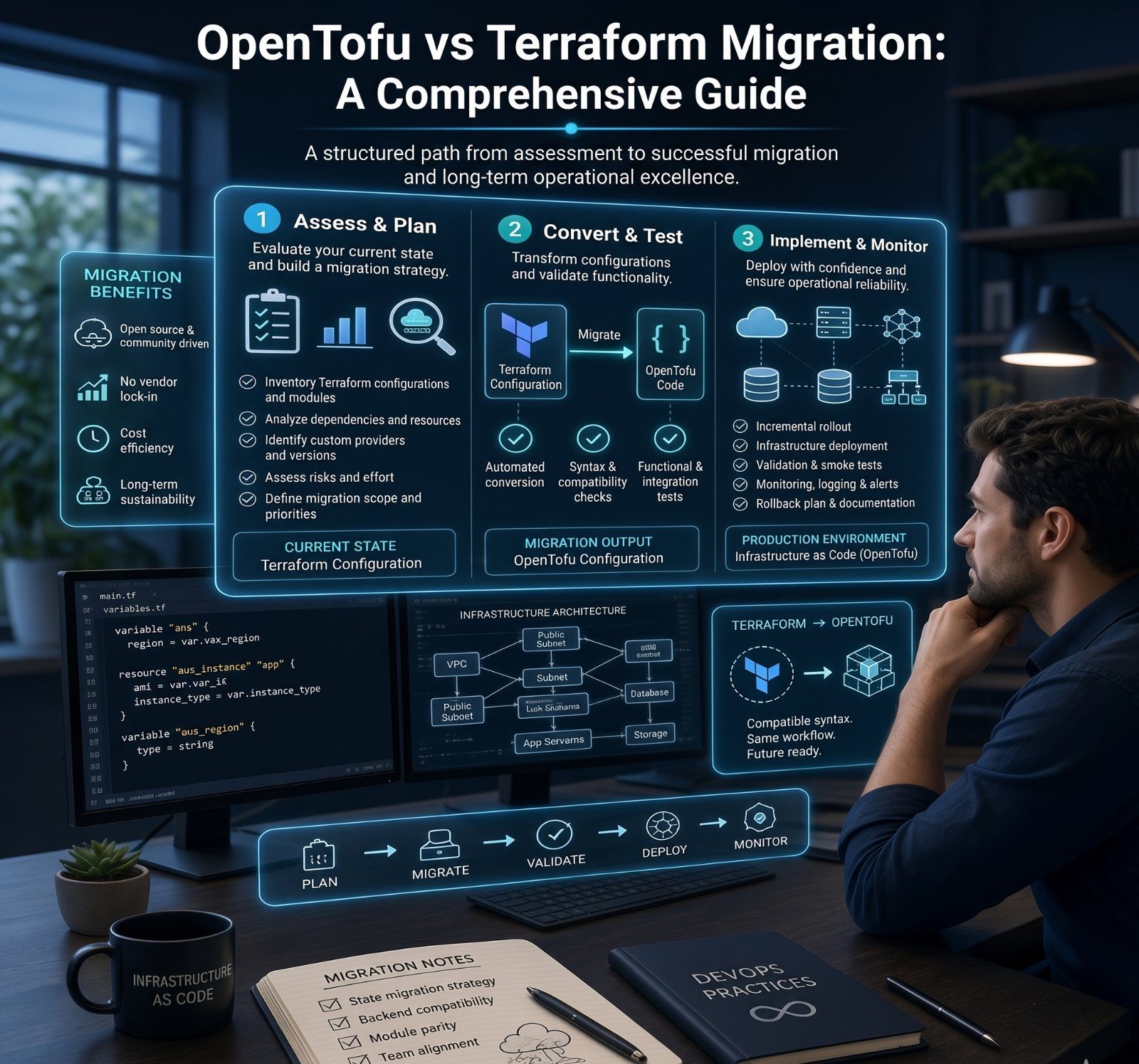
Preparing for OpenTofu vs Terraform Migration
Preparation is key to a successful migration. Moving from Terraform to OpenTofu involves several critical steps that require careful planning:
Assessing Current Infrastructure
Before initiating the OpenTofu vs Terraform Migration, assess your current infrastructure. Document existing configurations, dependencies, and workflows. Understanding these elements is crucial to identifying the necessary changes and potential impacts on your operations.
Defining Migration Objectives
Clear objectives need to be set. Is the purpose of migration cost reduction, enhanced customization, or better integration with specific components of your existing tech stack? Establishing these objectives will guide the migration process and help measure its success.
Conducting a Pilot Migration
Before a full-scale deployment, conduct a pilot migration with non-critical infrastructure components. This will help identify unforeseen challenges and provide valuable insights into the compatibility and performance of OpenTofu in your environment.
Steps for a Seamless Migration
Transitioning from Terraform to OpenTofu should be a phased and systematic process. Here’s a step-by-step approach:
Step 1: Educate and Train Your Team
Ensure your team is proficient in both Terraform and OpenTofu. Offer training sessions and workshops to bridge any knowledge gaps and prepare them for the technical aspects of the migration.
Step 2: Develop a Migration Plan
Create a comprehensive migration plan detailing each step, resources required, responsible personnel, and timelines. A well-documented plan minimizes downtime and ensures accountability throughout the process.
Step 3: Convert Terraform Configurations to OpenTofu
Each Terraform configuration needs to be translated into OpenTofu compatible code. Establish conversion guidelines to ensure consistency and accuracy. Automation tools can assist with this process, but manual oversight is necessary to catch any discrepancies.
Step 4: Testing and Validation
Extensive testing is crucial. Run validation tests to ensure that OpenTofu configurations behave as expected. Monitor the performance and operational efficiency of your infrastructure to confirm that it meets your predefined migration objectives.
Step 5: Implement and Monitor
Once testing is complete and satisfactory, proceed with the full implementation. Continuous monitoring during this phase will help quickly identify and address any issues that arise, ensuring minimal disruptions to your business processes.
Common Challenges and How to Overcome Them
Migrating from Terraform to OpenTofu isn’t without challenges. Here are some common issues and ways to address them:
Compatibility Issues: Ensure that all services and applications are fully compatible with OpenTofu features and that there are no unsupported components.
Resource Allocation: Adequate resources, including human resources and time, should be allocated. Underestimating resource needs can lead to rushed implementations and increased risk of failure.
Change Management: Implementing a comprehensive change management strategy ensures that all stakeholders are informed and prepared for the adjustments in workflow and potentially altered processes.
Conclusion
The OpenTofu vs Terraform Migration can be a rewarding venture for organizations looking to enhance efficiency, flexibility, and cost-effectiveness. By assessing your current infrastructure, setting clear objectives, and following a structured approach, the transition can be both smooth and beneficial. For organizations ready to embrace change, OpenTofu offers the potential for enhanced control and customization over their infrastructure-as-code initiatives, marking a notable advancement over traditional solutions. This guide has laid out the path; it's now up to your organization to walk it with confidence and strategic foresight.
Frequently Asked Questions
Partner with Hutech Solutions for Cloud, Data & AI-driven transformation. From strategy to execution, we help you build smarter, faster and for a better tomorrow.
Related reading
All posts
Small Models, Big Impact: Why Domain-Specific AI Is Outperforming Giant LLMs
Introduction For years, the AI conversation was dominated by scale. Bigger models, more parameters, broader general-purpose capabilities...

Agentic AI: From Chatbots to Autonomous Business Operators
Introduction For years, AI in the enterprise meant chatbots — tools that answered questions, generated drafts, or routed customer tickets...

Blockchain: The Supply Chain Revolution
Supply chains are among the most complex systems in modern commerce, involving countless participants, transactions, and handoffs across global networks...