The confluence of artificial intelligence (AI) and digital lending is revolutionizing the financial services industry. However, this technological advancement necessitates robust regulatory frameworks to ensure ethical practices and consumer protection. In India, the Reserve Bank of India (RBI) plays a crucial role in setting these regulations. This article delves into how the "AI and Digital Lending Regulation by RBI" is shaping the future of digital lending, offering insights for banking professionals, fintech founders, compliance officers, and others in the financial ecosystem.
Understanding the Regulatory Landscape
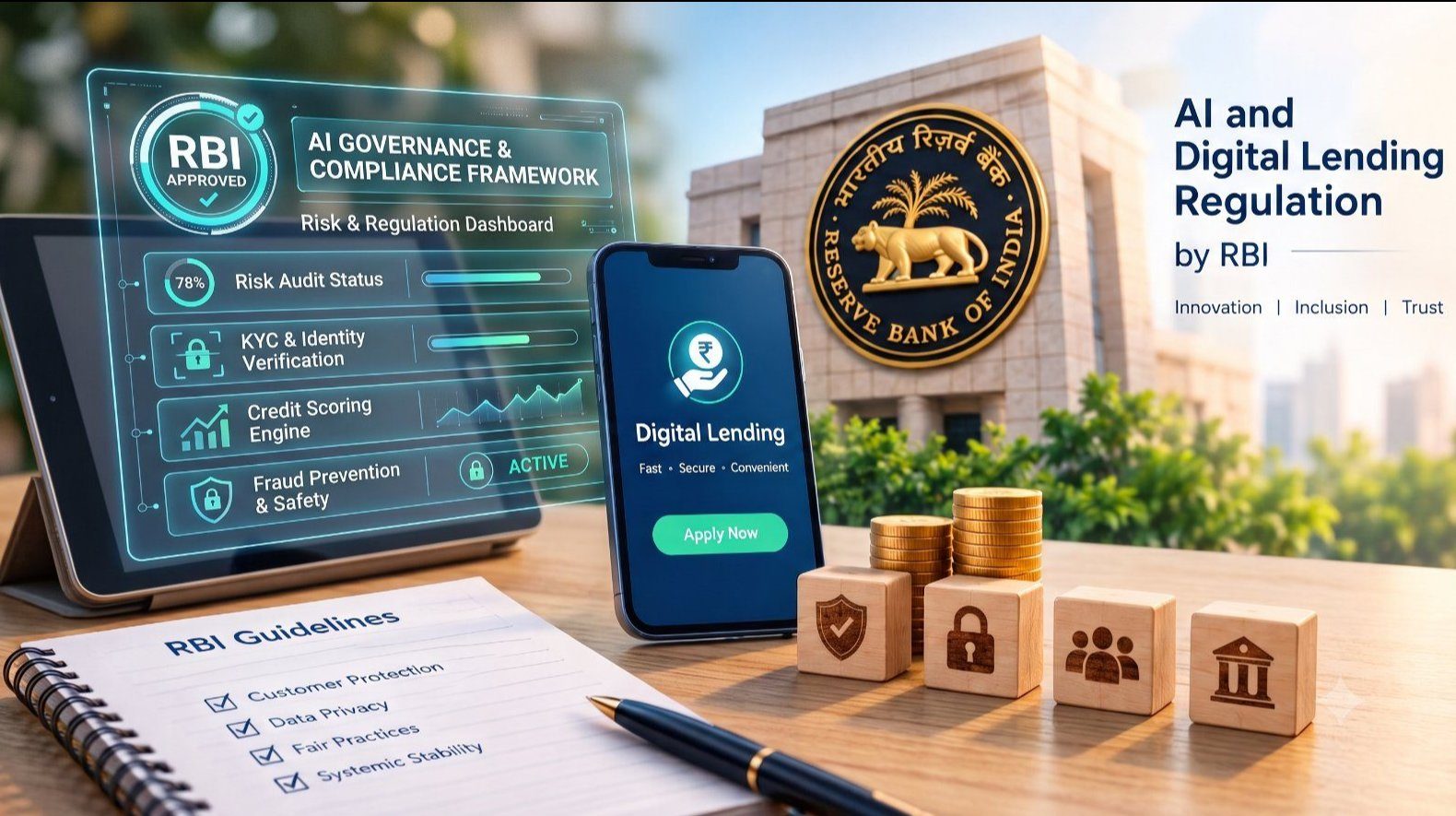
Digital lending in India has experienced exponential growth, largely propelled by AI technologies that enhance data analysis, risk assessment, and customer engagement. As a result, the Reserve Bank of India has recognized the potential risks and opportunities presented by AI technologies in this sector. The "AI and Digital Lending Regulation by RBI" aims to balance innovation with risk mitigation, ensuring that digital lending practices are equitable, transparent, and serve the interests of consumers.
In August 2022, the RBI issued detailed guidelines on digital lending to address concerns related to consumer protection and ethical lending practices. These guidelines articulate the need for enhanced transparency in digital lending operations, requiring lenders to disclose clear information about their services. This move ensures that borrowers are well-informed, reducing the risk of misleading terms and conditions that have plagued the industry in its nascent stages.
The Role of AI in Digital Lending
AI in digital lending spans a wide spectrum of applications, from credit scoring to personalized customer interactions. By leveraging machine learning algorithms, lenders can offer tailored products to customers swiftly, improving the overall efficiency of the lending process.
From Idea to Impact
Tell us what you want to build. We’ll bring the right strategy, team, and technology.
However, while AI offers these advancements, it also introduces challenges, particularly in terms of explainability and accountability. AI systems often function as black boxes, making it difficult to understand how decisions are reached. The "AI and Digital Lending Regulation by RBI" underscores the necessity for transparency in AI algorithms, ensuring that lenders remain accountable for the decisions made by AI systems. This aspect is critical for maintaining consumer trust and ensuring that AI-driven lending decisions are free from bias and discrimination.
Key Components of RBI's Regulation on Digital Lending
RBI's regulations focus on several key areas critical to the digital lending landscape. These include data privacy and security, fair lending practices, and grievance redressal mechanisms.
Data Privacy and Security
Digital lending relies heavily on data collection and analysis. The "AI and Digital Lending Regulation by RBI" mandates strict data privacy measures to protect consumer information. This includes obtaining explicit consent from borrowers before data collection and limiting the use of such data to predefined purposes. Furthermore, the guidelines emphasize the importance of secure data storage and transmission, safeguarding against unauthorized access and cyber threats.
Fair Lending Practices
Ensuring fairness in lending practices is a cornerstone of RBI's regulations. AI-driven models for credit evaluation must be designed to eliminate biases and provide equitable access to credit. The RBI insists on the use of ethically structured algorithms that do not discriminate based on race, religion, or economic status. The regulation also requires that borrowers receive comprehensive information about the terms of their loans, including interest rates, repayment schedules, and any associated fees.
Robust Grievance Redressal
An effective grievance redressal mechanism is essential for addressing consumer complaints and building trust in digital lending platforms. The RBI has highlighted the need for lenders to establish robust systems that efficiently handle consumer grievances. These mechanisms should be easily accessible to borrowers and offer clear processes for resolving complaints promptly. This initiative aims to foster transparency and accountability among digital lenders, providing consumers with the confidence to pursue digital lending options safely.
Impact on the Financial Ecosystem
The implementation of "AI and Digital Lending Regulation by RBI" is set to have a profound impact on the financial ecosystem. By enforcing stringent regulatory measures, RBI not only protects consumers but also encourages healthy competition and innovation within the digital lending space.
Fintech companies, NBFCs, and banks involved in digital lending are now adapting their operations to align with these regulations. This adaptation necessitates investments in technology and compliance tools, fostering innovation that aligns with regulatory expectations. As companies seek to comply with these guidelines, they also embrace new opportunities to enhance customer service and operational efficiency through improved AI deployment strategies.
Moreover, these regulations enhance the accountability of digital lending platforms, thereby attracting more consumers to digital borrowing channels. With transparent operations and robust consumer protection mechanisms, trust in digital lending is likely to strengthen, promoting greater financial inclusion across India.
Conclusion
The advent of AI technologies has indisputably transformed the digital lending landscape, offering remarkable efficiencies and personalizations. However, with these advancements come ethical and regulatory challenges. The "AI and Digital Lending Regulation by RBI" serves as a pivotal framework, steering the industry towards responsible growth while safeguarding consumer interests. For banking professionals, fintech founders, compliance officers, and the broader financial community, understanding and navigating these regulations will be crucial.
In this rapidly evolving landscape, continuous engagement with regulatory updates and advancements in AI technology will be essential. By embracing these changes, the industry can drive innovation that is both consumer-friendly and compliant, leading to a more robust and equitable financial system in India.
The need for clear communication and collaboration between regulatory bodies, financial institutions, and technology providers cannot be overstated. Open dialogues will ensure that all stakeholders align on best practices and address any regulatory ambiguities that may arise. Leveraging industry forums and workshops can facilitate this exchange of ideas, fostering an environment where innovation and compliance coexist harmoniously.
Moreover, as the landscape of AI in financial services evolves, there is an increasing need for robust governance frameworks. Establishing ethical guidelines and compliance measures will help as the industry navigates this transformative era. Continuous training and education for professionals in the sector are critical as they adapt to these changes. By equipping themselves with the latest skills and knowledge, they will be better positioned to manage AI-driven systems effectively and responsibly.
Looking forward, the synergy of AI and digital lending holds tremendous potential for reshaping the financial ecosystem in India. With vigilant oversight from regulatory bodies like the RBI, coupled with proactive engagement from all industry participants, the sector can anticipate a future that is both innovative and equitable. Balancing technological advancement with consumer protection will ultimately define the success of digital lending in this dynamic landscape.
Partner with Hutech Solutions for Cloud, Data & AI-driven transformation. From strategy to execution, we help you build smarter, faster and for a better tomorrow.
Related reading
All posts
Small Models, Big Impact: Why Domain-Specific AI Is Outperforming Giant LLMs
Introduction For years, the AI conversation was dominated by scale. Bigger models, more parameters, broader general-purpose capabilities...

Agentic AI: From Chatbots to Autonomous Business Operators
Introduction For years, AI in the enterprise meant chatbots — tools that answered questions, generated drafts, or routed customer tickets...

Blockchain: The Supply Chain Revolution
Supply chains are among the most complex systems in modern commerce, involving countless participants, transactions, and handoffs across global networks...