
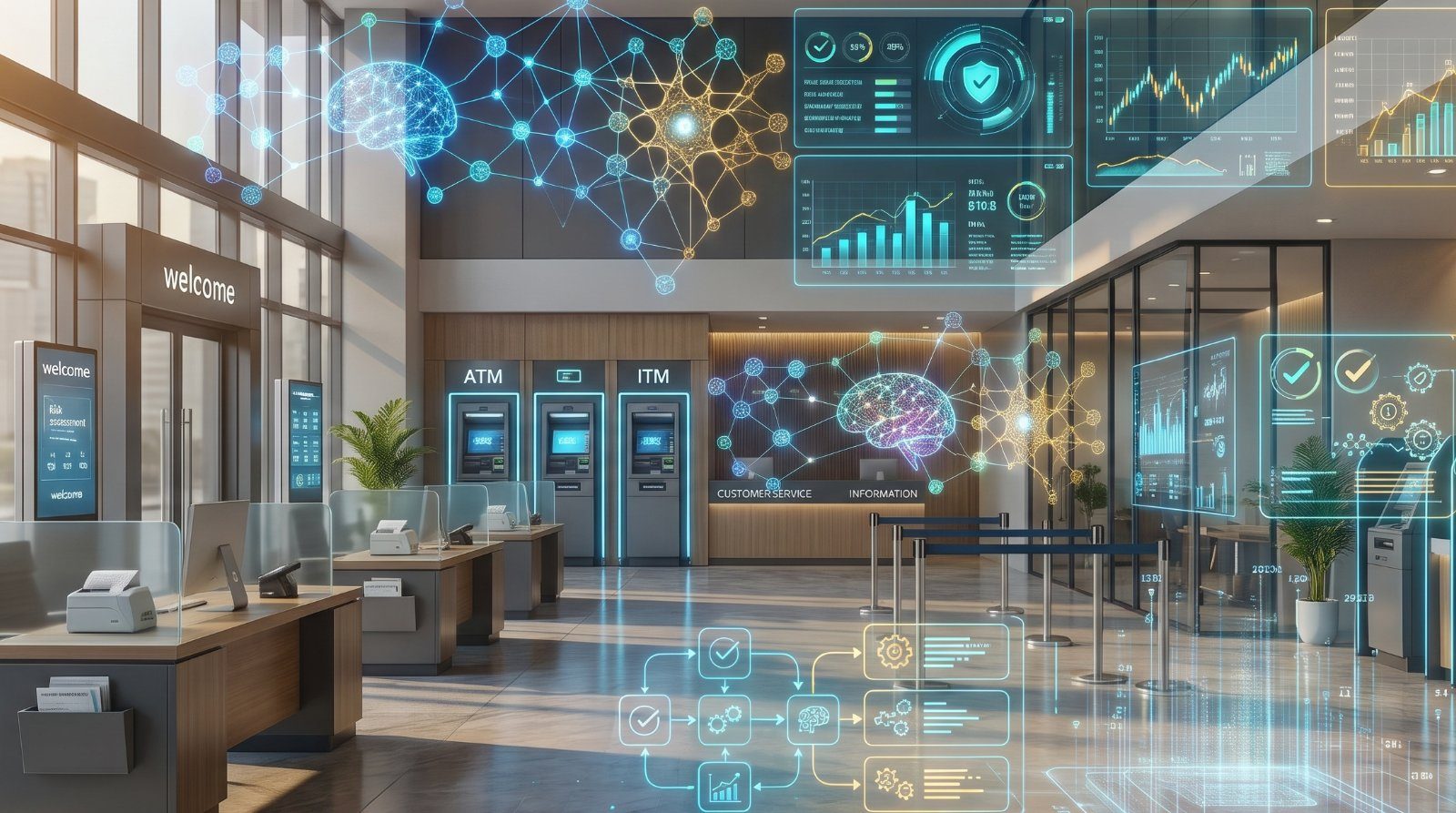
The digital evolution of the banking industry has been profoundly impacted by cutting-edge technologies like agentic AI and autonomous systems. These innovations are redefining customer interactions, optimizing operations, and enhancing decision-making processes. This article will explore how these technologies are transforming the banking sector and why they represent a pivotal shift for the industry.
Understanding Agentic AI in Banking
Agentic AI, often characterized by its proactive, autonomous decision-making capabilities, is a type of artificial intelligence designed to perform tasks without human intervention. This autonomy is crucial in the banking industry, where rapid decision-making and efficient operations are essential. By leveraging agentic AI, banks can significantly reduce the time and resources required for various operations, from managing portfolios to executing transactions.
For instance, consider the realm of risk assessment and management. Traditionally reliant on manual analysis, these tasks can now be handled more efficiently with agentic AI systems that assess risks by analyzing vast datasets in real-time. Such systems can detect patterns and anomalies more accurately than humans, thus enabling more informed and quicker decision-making.
From Idea to Impact
Tell us what you want to build. We’ll bring the right strategy, team, and technology.
The Role of Autonomous Systems in Customer Service
Autonomous systems are increasingly becoming a staple in customer service within the banking sector. These systems, empowered by AI, revolutionize how banks interact with their clients. Virtual assistants and chatbots, for instance, are front-line tools powered by agentic AI that manage everything from routine inquiries to complex transaction issues autonomously.
These AI-driven customer service tools operate 24/7, providing immediate assistance and support, which is crucial for enhancing customer satisfaction and loyalty. Furthermore, they can personalize interactions by processing and analyzing customer data to tailor services and offers, thus improving the customer’s experience and engagement with the bank.
Optimizing Banking Operations Through Automation
The integration of agentic AI and autonomous systems is transforming the efficiency of banking operations. Automation significantly streamlines processes such as transaction handling, loan processing, and compliance checks, reducing the time and complexity involved.
For example, the automation of back-office operations, such as data entry and document verification, can lead to substantial cost savings and process efficiencies. Autonomous AI systems can process thousands of documents in minutes, freeing human employees to focus on tasks that require more nuanced decision-making. This shift not only decreases operational costs but also reduces the potential for human error, improving the overall reliability and accuracy of banking services.
Enhancing Security and Fraud Detection
Security is paramount in the banking industry, and agentic AI systems are at the forefront of revolutionizing fraud detection and prevention mechanisms. By continuously monitoring transactions and user behaviors, these systems can identify irregular patterns that may indicate fraudulent activities.
Agentic AI systems possess the capability to learn and adapt over time, improving their effectiveness in preventing fraud as they gather more data. Such advancements are particularly important in today’s digital banking landscape, where cyber threats are increasingly sophisticated. The proactive, autonomous nature of these systems provides a robust defense, ensuring that banks can protect their assets and customer information more effectively.
Agentic AI in Strategic Financial Planning
In strategic financial planning, agentic AI can process enormous volumes of market data to provide insights and predictions that guide investment strategies. The ability to autonomously analyze trends and projections empowers banks to make proactive, data-driven decisions.
Agentic AI systems can identify market shifts long before they manifest, allowing financial planners to adjust strategies to optimize portfolio performance and mitigate risks. This capability not only enhances a bank’s competitive edge but also supports the development of innovative financial products tailored to emerging market needs.
Conclusion: Embracing the Future of Banking
In conclusion, agentic AI and autonomous systems are undeniably transforming the banking industry. From enhancing customer service and operational efficiency to advancing security measures and strategic planning, these technologies herald a new era of banking innovation. For bank officials, business owners, and developers, understanding and leveraging these advancements is crucial to staying competitive and effective in an ever-evolving financial landscape. As the banking sector continues to embrace these changes, the promise of streamlined operations, improved customer satisfaction, and heightened security becomes increasingly tangible. Agentic AI autonomous systems transforming the industry is not just a prediction, but an ongoing reality shaping the future of finance.
By adopting these cutting-edge technologies, banks can offer more personalized services, optimize their operations, and develop new financial products that cater to modern demands.
Strategic Adoption and Implementation
The successful integration of agentic AI and autonomous systems requires a strategic approach and meticulous planning. Banks must first assess their current technological capabilities to identify areas where AI can add value. This includes conducting a comprehensive audit of existing processes and workflows to pinpoint potential points of automation and enhancement.
Investment in upgrading IT infrastructure is crucial. Banks must ensure they have the necessary technical foundation to support sophisticated AI algorithms and data processing requirements. Partnering with technology providers specializing in AI solutions can ease the transition. These collaborations enable banks to access cutting-edge expertise, ensuring the deployment of robust and secure AI systems.
Furthermore, training and educating banking personnel on AI functionality is essential. Employees must be well-versed in AI applications to effectively manage and operate these systems. Workshops and continuous learning sessions can equip teams with the necessary skills to harness AI-driven tools, ultimately fostering an innovative culture within the organization.
Regulatory Challenges and Considerations
As agentic AI and autonomous systems continue to penetrate the banking industry, they inevitably encounter numerous regulatory hurdles. Financial institutions must navigate complex regulatory frameworks designed to protect customer data and ensure fair practices. Engaging with regulatory bodies to align AI initiatives with existing compliance requirements is necessary to avoid potential pitfalls.
Banks should proactively develop internal policies and guidelines specific to AI usage. These policies must outline ethical considerations and establish fail-safes to prevent bias in AI decision-making processes. Adopting a transparent approach in AI operations fosters trust among stakeholders, an essential component in maintaining customer relationships in a digitized banking environment.
Future Prospects: A Collaborative Ecosystem
The future of agentic AI and autonomous systems in banking is promising, with vast opportunities for further advancements and integration. As the technology evolves, banks can expect to see AI becoming a standard component in their daily operations. Collaboration will play a pivotal role in shaping this ecosystem. Partnerships between fintech companies, regulatory bodies, and banking institutions will drive innovation and set new industry standards.
Emerging technologies such as blockchain and quantum computing could complement AI, enhancing its potential to revolutionize banking operations further. By fostering a collaborative environment, the industry can accelerate the development and deployment of innovative solutions that push the boundaries of traditional banking practices.
Conclusion: Embracing a New Era
In summary, agentic AI and autonomous systems transforming the banking industry is more than a technological trend; it is the dawn of a new era in financial services. By strategically adopting these technologies, banks can achieve unprecedented levels of operational efficiency, customer satisfaction, and security. Awareness and adaptation are key for stakeholders aiming to remain ahead of the curve in an ever-evolving financial landscape. As these systems continue to reshape the industry, the possibilities for innovation and growth are limitless. Embracing this change not only ensures survival but also secures a competitive edge in the future of finance.
Partner with Hutech Solutions for Cloud, Data & AI-driven transformation. From strategy to execution, we help you build smarter, faster and for a better tomorrow.
